How to File a Homeowners Insurance Claim: The Step-by-Step Guide
The exact sequence of filing a homeowners claim — from first call to final settlement. What to say, what to document, and the mistakes that cost money.
By Matt Price
Founder & Builder, DwellRecord
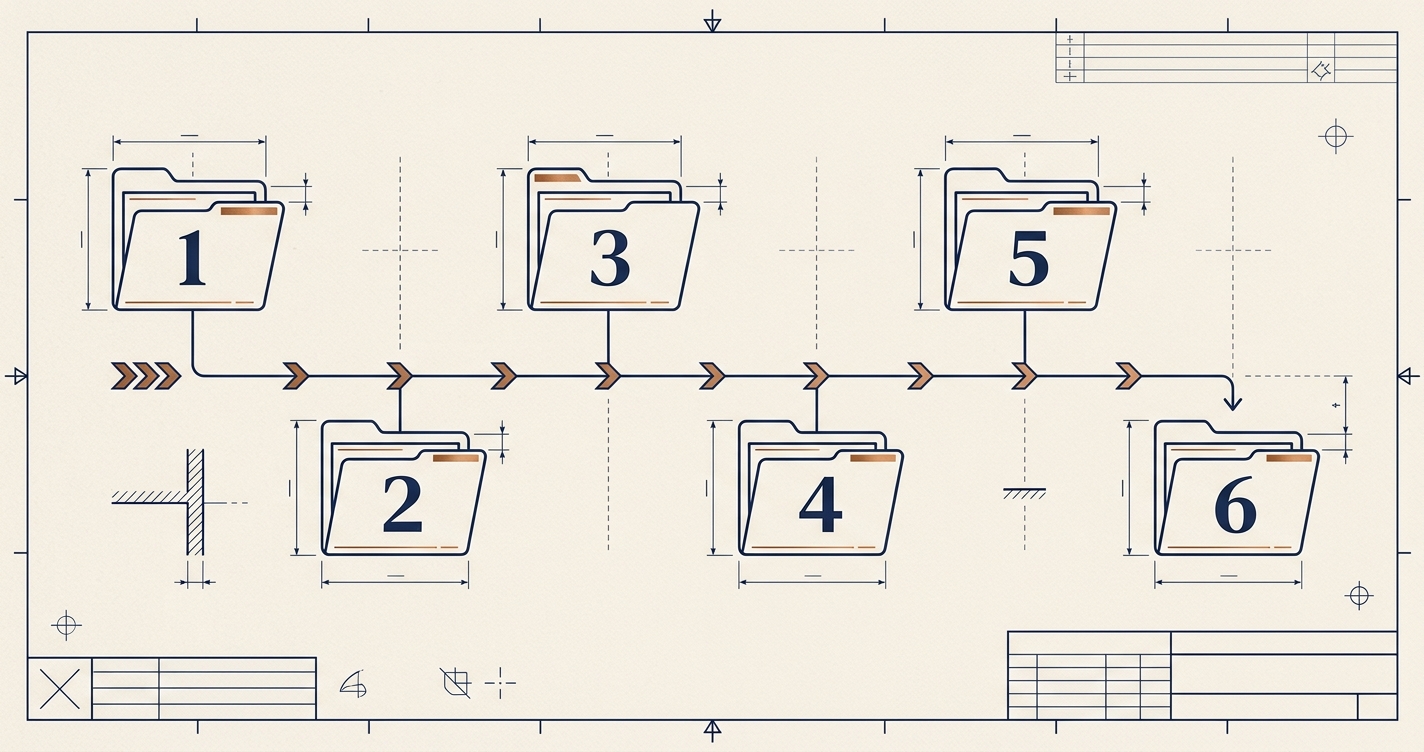
Part of our insurance series: see The Complete Home Inventory Guide for Insurance Claims for the framework. This post is the step-by-step playbook for when a claim actually happens.
A homeowners insurance claim is simple in principle — damage happens, you report it, the insurer pays to make you whole. In practice, the first 72 hours set the tone for a process that often lasts months. Homeowners who know what to do immediately tend to walk away with full settlements. Homeowners who improvise often lose thousands to documentation gaps they didn't know were accumulating.
This is the complete sequence, phase by phase, of how to actually file and settle a homeowners insurance claim in the United States.
Phase 1: The First 24 Hours
Step 1: Ensure Safety
Before anything insurance-related, make sure everyone is out and accounted for. Call 911 if there's active fire, gas, structural collapse, or injury. For water-only events, shut off the main valve if you can do so safely.
Don't re-enter a damaged structure until authorities or your insurer confirm it's safe. A partially collapsed structure is far more dangerous than it looks.
Step 2: Document Before You Touch Anything
Before you move a single item, photograph and video everything. Wide shots showing the scope of damage, then close-ups of specific damaged items. Timestamps matter — modern phones embed them in photo metadata automatically.
This is the easiest step to skip and the hardest to undo. Photos taken during the emergency are the most credible evidence an adjuster will see.
Step 3: Prevent Further Damage
Most policies require you to take reasonable steps to prevent additional damage. This is typically called the "duty to mitigate." Examples:
- Tarping a damaged roof
- Boarding broken windows
- Removing standing water to prevent mold
- Shutting off utilities to prevent secondary damage
Keep every receipt. Mitigation costs are reimbursable, but only with documentation.
Step 4: Call Your Insurance Company's Claim Line
Not your agent — the 24-hour claim line. The number is on your insurance card, declarations page, and the insurer's website. File the initial claim and get a claim number. Write it down. You'll reference it dozens of times over the next weeks.
What to say on this first call:
- Brief description of what happened
- When it happened
- Whether anyone was injured
- Whether the property is still habitable
- That you're working to prevent additional damage
- Speculation about cause if you don't know ("I think the water heater was the original problem but I'm not sure")
- Unverified damage totals
- Admission of fault or prior known conditions
Let the facts carry the first call. Speculation ends up in the claim file and can be used later.
Phase 2: The First Week
Step 5: Open a Claim Journal
The single best thing you can do for a serious claim is start a running log. Every phone call, every email, every site visit, every promise, every name. Date, time, and person.
Adjusters change, representatives rotate, and promises made in week two can be forgotten by week six. A written record protects you.
Step 6: Meet the Field Adjuster
Within a few days the insurer will send a field adjuster to inspect. For major claims — fire, extensive water damage, structural — they come in person. For smaller claims (e.g., a single stolen bike), they may handle it remotely with photos you provide.
When the field adjuster arrives:
- Walk the property with them. Don't point things out and then leave — stay present.
- Provide your home inventory if you have one. This is when months of quiet documentation pays off in hours. See the complete inventory guide.
- Provide your photo/video documentation from step 2.
- Answer questions factually. You don't have to volunteer theories about cause.
- Take notes on what the adjuster points out, what they photograph, what they skip.
Step 7: Track Additional Living Expenses
If your home is uninhabitable, Coverage D (Loss of Use, also called Additional Living Expenses) reimburses you for:
- Hotel or temporary rental housing
- Restaurant meals above what you'd normally spend on groceries
- Laundry if you can't access your own
- Additional mileage if your temporary housing is further from work/school
- Pet boarding if you can't bring pets
Keep every receipt. Many homeowners lose thousands of ALE reimbursement because they don't track the day-to-day expenses.
Coverage D typically has a limit (often 20–30% of Coverage A) and a time cap. Know both.
Step 8: Get Independent Estimates for Major Damage
For structural damage, you want at least two independent contractor estimates in addition to whatever the insurer's own contractor scope says. This establishes a range and prevents lowball first offers from becoming the settlement baseline.
Ask contractors to write itemized estimates (labor + materials per line) rather than one lump sum.
Phase 3: The First Month
Step 9: Review the Scope of Loss
Within a few weeks, the insurer produces a scope of loss document — the detailed line-by-line accounting of damage and proposed payout. Read it carefully. This is where most disputes start.
Common issues:
- Items missed entirely (check every room against your inventory)
- Quantities lower than reality ("16 feet of baseboard" when the damaged wall is 28 feet)
- Unit prices below market rate (insurers sometimes use outdated pricing tables)
- Labor hours underestimated
- Depreciation applied incorrectly (see our RCV vs. ACV guide)
- Damaged items classified as repairable when they aren't
Step 10: Dispute Items That Don't Match Reality
Disputes are normal and expected. Reply in writing (email creates a paper trail) with:
- The specific line item being disputed
- Why it's incorrect (reference photos, contractor estimates, inventory records)
- What the corrected value should be
- Supporting documentation attached
Most disputes are resolved through back-and-forth with the adjuster. The insurer usually adjusts in good faith on clearly documented discrepancies.
Step 11: Engage a Public Adjuster If the Gap Is Large
If the settlement offer is materially below your documented losses and the adjuster won't budge, consider a public adjuster — a licensed professional who works for you, not the insurance company. They typically take 10–15% of the final settlement as their fee.
Good fit:
- Total loss or near-total loss claims
- Complex claims with multiple damage categories
- Claims where the insurer is clearly undervaluing
Poor fit:
- Small, straightforward claims
- Situations where the gap is small and getting attorney's fees would exceed the difference
Never hire a public adjuster who approaches you after a disaster — these are often predatory. Vet any public adjuster through your state's Department of Insurance licensing records.
Phase 4: Settlement
Step 12: Review the Final Settlement Offer
Before you sign anything, confirm:
- Every agreed-upon damage category is included
- The math checks out (coverage limits, deductible applied correctly, depreciation holdback noted if RCV)
- Release language doesn't waive rights to future claims on the same peril (sometimes settlements include overly broad release language)
Step 13: Accept or Appeal
If you accept, the insurer sends final payment (often split between you and your mortgage lender if there's outstanding debt secured by the home).
If you don't, you have options:
- Internal appeal — many insurers have a formal dispute escalation
- State Department of Insurance complaint — free, often surprisingly effective
- Appraisal clause — most policies include a binding appraisal process for disputed values
- Litigation — a last resort, but available
Step 14: Complete Repairs and Claim Depreciation Holdback
If you're on Replacement Cost Value, the depreciation portion of your settlement is held back until you actually complete repairs and submit receipts. Most policies give you 180 days to a year. Don't forget this step — homeowners often leave thousands on the table by failing to claim the holdback.
Phase 5: After the Claim Closes
Step 15: Update Your Records
- Save every document related to the claim (claim number, correspondence, scope of loss, receipts, final settlement letter) for at least 7 years
- Update your home inventory to reflect replaced items
- Photograph repaired areas
- Review your coverage — was it adequate? If not, adjust before the next renewal
Step 16: Know That Claims History Follows You
Every claim you file goes into the CLUE database (Comprehensive Loss Underwriting Exchange), which insurers use for 5–7 years when underwriting your next policy or quoting a new home you purchase.
Implications:
- Multiple small claims can trigger non-renewal at renewal time
- The decision to file at all should consider this (for claims just above the deductible, sometimes paying out of pocket preserves the policy long-term)
- Before buying a home, request the CLUE report on that property
Mistakes That Cost Money
- Delayed reporting — most policies require prompt notice. Waiting weeks to file damages your position.
- Not documenting before cleanup — photos after the fact look staged.
- Throwing away damaged items before they're inspected — even worthless items should stay until the adjuster has seen them.
- Accepting the first offer automatically — first offers are starting points, not ceilings.
- Not claiming the RCV depreciation holdback — money left on the table.
- Accidentally signing broad releases — read what you're signing.
- Using the insurer's preferred contractor without question — sometimes fine, sometimes not. Their contractor may be incentivized to minimize scope.
- Not tracking ALE expenses — Coverage D reimburses only what you document.
What Good Documentation Looks Like
The homeowners who settle fastest and fullest share three traits:
- Pre-existing inventory — they already knew what they owned and what it was worth
- Immediate photo documentation — scope was captured before cleanup began
- Organized claim journal — every interaction recorded, every promise tracked
DwellRecord holds the first pillar for you: a room-by-room inventory with photos, serial numbers, and replacement values that you can export as a PDF and hand to an adjuster on day one. Start your free inventory.
Frequently Asked Questions
Do I have to file a claim for small damage?No. For damage under or just above your deductible, you may save money long-term by paying out of pocket and preserving your claims-free status.
How long do I have to file?Most policies require "prompt" notice. Legally, statutes of limitation vary by state (typically 1–5 years from date of loss), but practically you should file within days of discovering the damage.
Will my premium go up after a claim?Usually yes, especially on multi-claim profiles or catastrophic losses. One small claim after years of no claims often has minimal impact. Multiple claims in a 3-year window can trigger non-renewal.
Can my claim be denied?Yes. Common reasons: excluded peril (flood under a standard policy), maintenance-related damage, policy lapse, misrepresentation on the application. Read your denial letter carefully — many denials are appealable with additional documentation.
Should I accept the insurer's contractor?Their contractor may be faster and handle the paperwork directly with the insurer. But you're entitled to choose your own. For straightforward repairs, preferred contractors are often fine. For larger scopes, independent is worth the friction.
Related Guides
- The Complete Home Inventory Guide for Insurance Claims — cluster hub.
- Home Inventory Checklist for Insurance Claims — room-by-room spoke.
- RCV vs. ACV: Which Coverage You Actually Have — the settlement method that changes everything.
The Bottom Line
Insurance companies pay claims every day. The system works — but it works best for homeowners who know what they're doing before the disaster happens. Build the inventory, keep the photos organized, and when something goes wrong, follow the sequence above. Document every step. Read every document. And don't sign anything you don't understand.
Editorial, not advice. This article is educational and reflects publicly available IRS, state, and insurance guidance at the time of writing. It is not tax, legal, or insurance advice. For decisions that touch your specific situation, consult a CPA, enrolled agent, tax attorney, or licensed insurance professional in your state. DwellRecord keeps the record — your advisor makes the call.
Last reviewed:
Ready to protect your home investment?
Start documenting your improvements, assets, and warranties for free.
Get Started Free